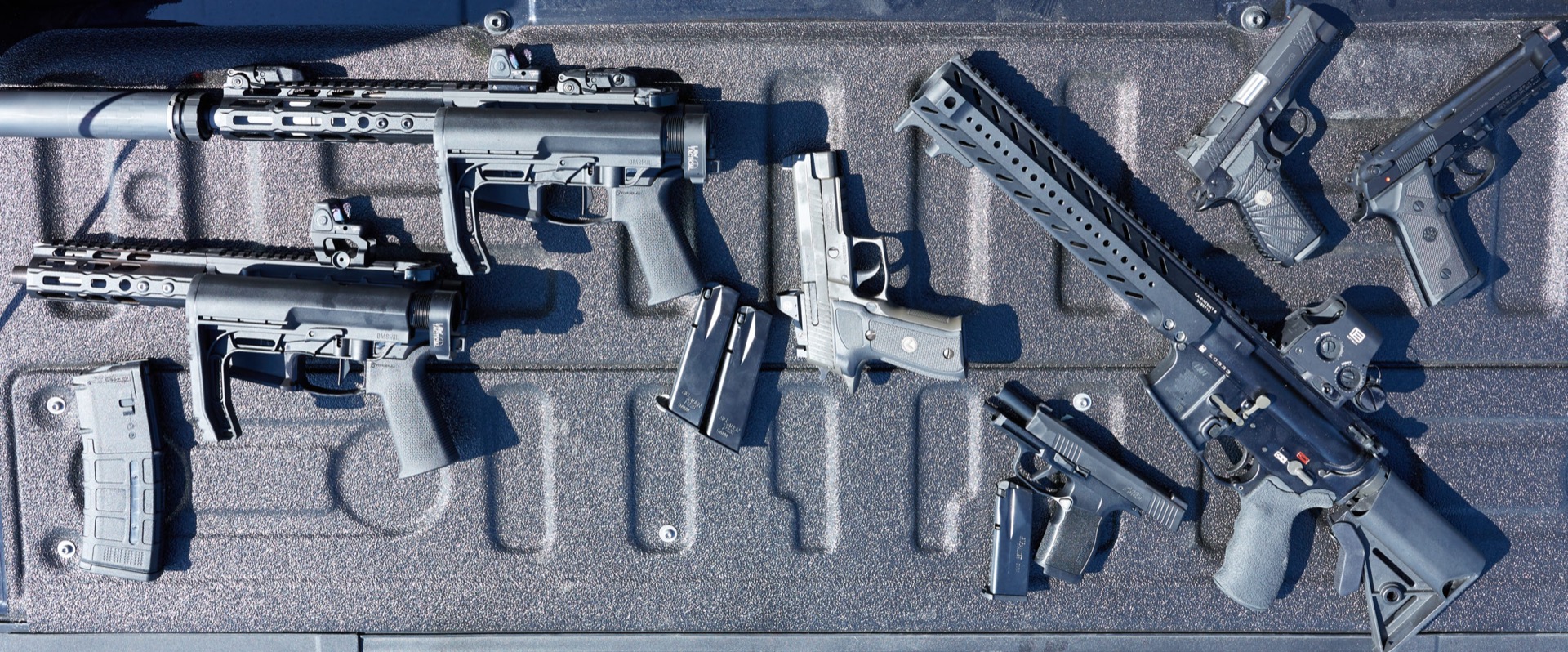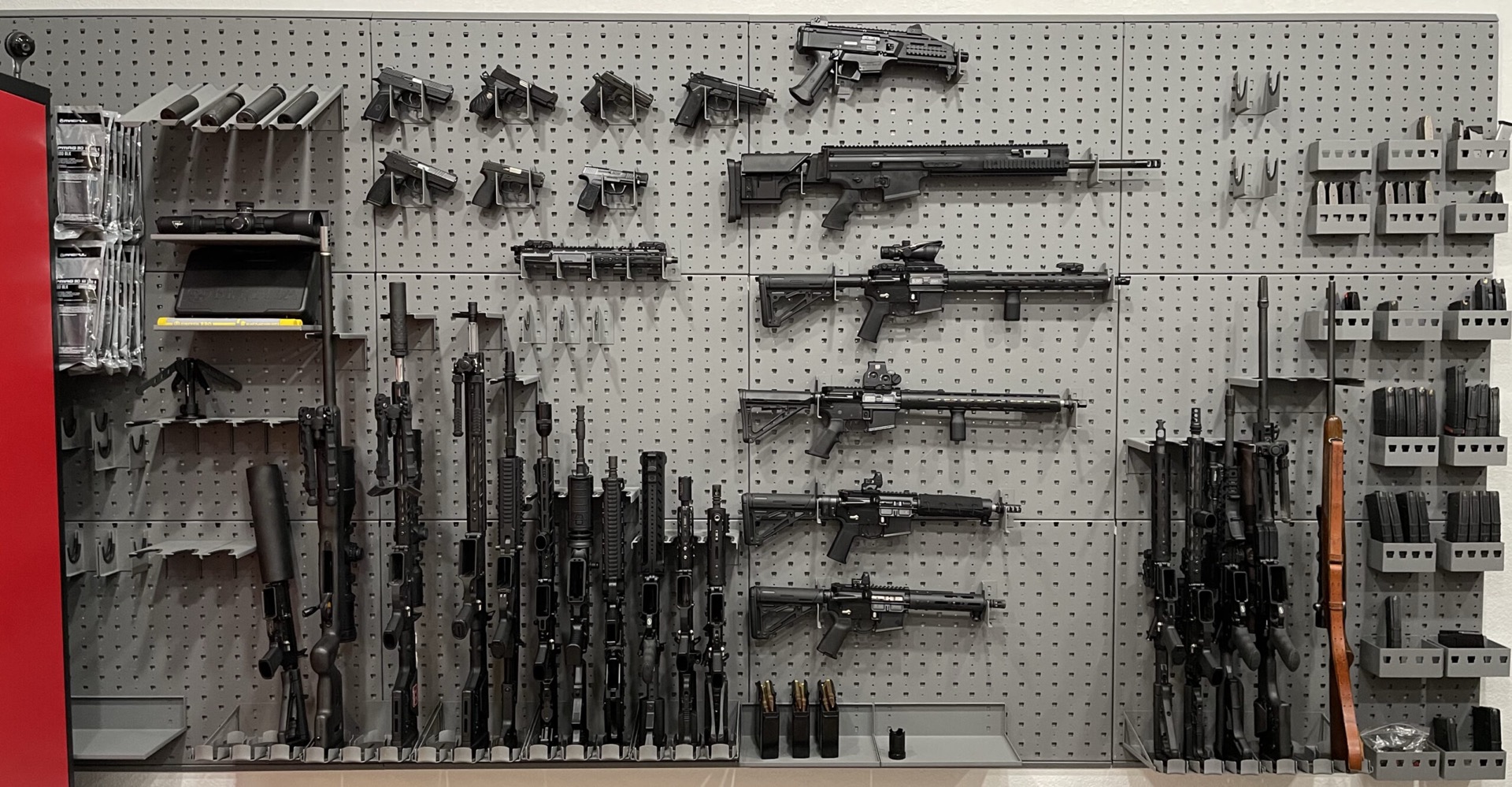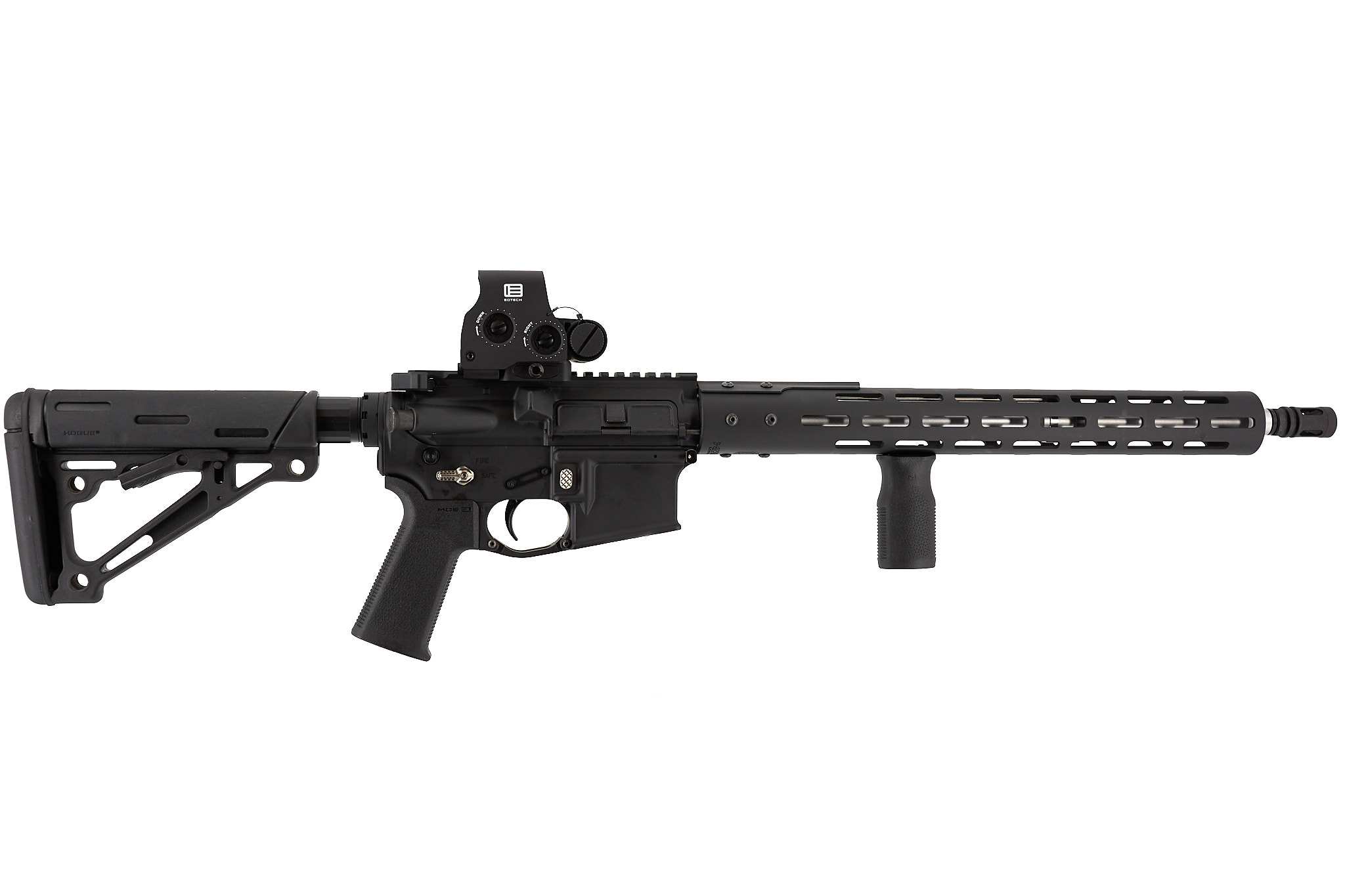
Why .300 Blackout for CQB: Full Power From a Short, Quiet Barrel
Close-quarters defense rewards a weapon that is short, controllable, and quiet enough to shoot indoors without destroying your hearing. That is the exact problem .300 AAC Blackout was built to solve. Below is how the cartridge works, why it beats 5.56 NATO from a short barrel, and what a complete CQB system looks like.
What is .300 Blackout?
.300 Blackout (.300 BLK) is a .30-caliber rifle cartridge designed to run in a standard AR-15 platform using the same bolt and magazines, changing only the barrel. It was engineered to deliver full ballistic performance from a barrel as short as 9 inches and to cycle reliably both supersonic and subsonic, suppressed or unsuppressed.
Why is .300 Blackout better than 5.56 for short barrels?
5.56 NATO depends on velocity to do its work, and velocity comes from barrel length. Chop a 5.56 barrel down to CQB length and muzzle velocity, terminal effect, and the muzzle blast all move in the wrong direction: you lose energy and gain an enormous fireball. .300 Blackout burns its powder fully in a short barrel, so a 9- to 10.5-inch .300 BLK delivers the energy it was designed to, while a 9-inch 5.56 is essentially a flash-bang.
Short barrels without the velocity penalty
Because the cartridge reaches near-full performance by 9 inches, a .300 BLK build can be dramatically more compact and maneuverable in hallways, doorways, and vehicles without trading away terminal effectiveness.
Designed for suppression
.300 Blackout shines with a suppressor. Supersonic loads stay quiet and controllable behind a can, and purpose-built subsonic loads (typically 190–220 grain) drop below the speed of sound for genuinely hearing-safe indoor shooting. One rifle, one suppressor, two distinct missions.
What are the trade-offs of .300 Blackout?
It is not a long-range cartridge. Supersonic .300 BLK sheds energy past roughly 200–300 yards, and subsonic loads are short-range only. Ammunition costs more than 5.56 and is less common on shelves. And because .300 BLK chambers in a 5.56 rifle, you must never let a .300 round find its way into a 5.56 chamber. A labeled, dedicated magazine and disciplined storage prevent a dangerous out-of-battery event.
What does a complete .300 Blackout CQB system include?
The caliber is only half the answer. A CQB weapon has to disappear into the shooter, which means the supporting hardware has to be engineered in, not bolted on:
- Adjustable gas system tuned to run clean both supersonic and suppressed.
- Enclosed reflex optic for fast both-eyes-open target acquisition.
- Weapon light on an offset or inline mount. You cannot shoot what you cannot identify.
- Suppressor or suppressor-ready muzzle device, sized to the role.
- Sling hardware and grip geometry set up for a fighting stance and a fast cheek weld.
At Horizon Arms Research we build the platform as one weapon, then prove it across supersonic and subsonic before it leaves the shop. Reliability under pressure is the entire point.